
Table of Contents
The HTTP 200 Trap
If you have spent any significant time debugging modern web applications(LinkedIn SDUI case study), you know a brutal truth: an HTTP 200 OK status code rarely guarantees success. In Server-Driven UI (SDUI) architectures—where the backend dictates the UI state—business logic errors are frequently swallowed and returned as generic error toasts in the response body.
This LinkedIn SDUI case study documents the meticulous process of debugging a silent failure when attempting to save a profile project form. What started as a simple form submission turned into a deep dive into asynchronous token expirations, Protobuf schema mismatches, and a backend validation bug that completely breaks when fed standardized data.
The Engineering Stack
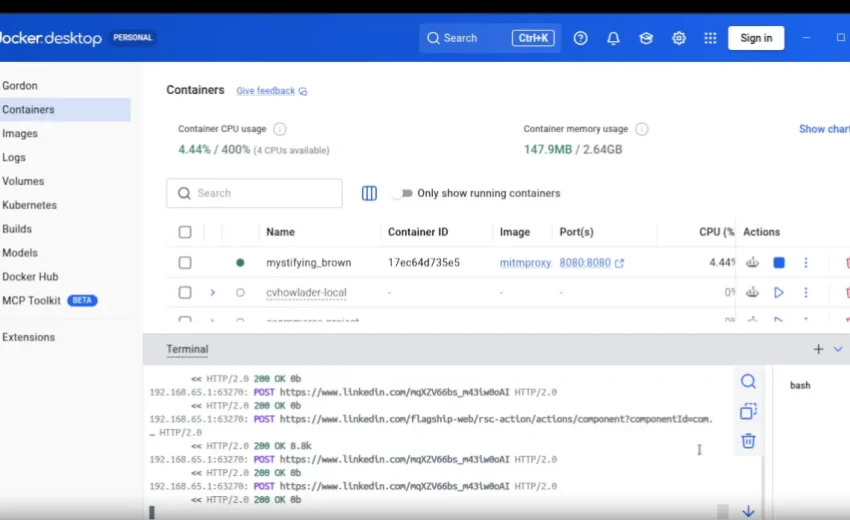
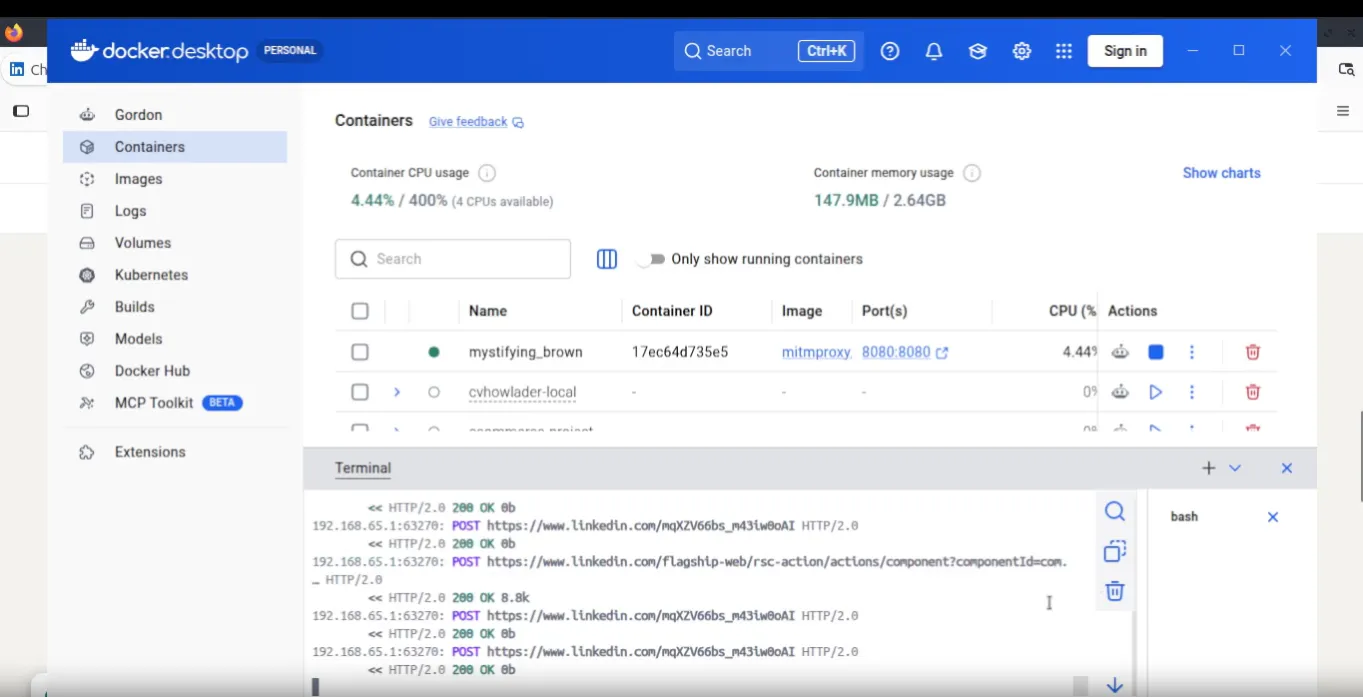
To get total visibility into the encrypted HTTPS traffic, standard browser DevTools weren’t enough(LinkedIn SDUI case study). We needed a full man-in-the-middle (MITM) proxy setup that allowed for real-time, scriptable payload mutations.
- OS: Lubuntu (LXQt)
- Containerization: Docker Desktop (v4.96.1)
- Proxy Engine:
mitmproxyrunning in headlessmitmdumpmode - Automation: Python 3 add-on script
- Client: Firefox routed through
127.0.0.1:8080with the mitmproxy CA certificate trusted.
A Critical Security Retrospective
During the initial network capture, the raw HTTP headers—including live li_at and JSESSIONID cookies—were accidentally exposed in plain text in a shared log(LinkedIn SDUI case study).
Senior Best Practice: Never share raw network logs without sanitizing them. Session cookies are the keys to the kingdom. If those tokens are active, anyone can hijack the account without a password. A strict sanitization step must be applied before saving or sharing any HAR files or proxy logs. Always invalidate sessions immediately if a leak is suspected.
Phase 1: The Initial Hypothesis
LinkedIn’s SDUI relies on a complex rsc-action endpoint. The saveProfileProjectForm request contains a deeply nested JSON payload with a states array (key-value bindings) and a requestedArguments object(LinkedIn SDUI case study).
Our first hypothesis focused on two obvious schema anomalies:
- The Date Schema: The payload contained
"day": 0. Calendars start at 1, and Protobuf validation often rejects zero-days. - The Contributors Array: The payload lacked the user’s own URN in the
contributorslist, triggering a “Duplicate Member” or validation error.
We wrote a Python script to fix these fields. The server still returned an empty errors: [] array and the generic “Something went wrong” toast.
Phase 2: The Bisection Methodology
When a server returns a silent failure, guessing is a waste of time. We had to treat it like a black-box vulnerability. By systematically bisecting the JSON payload, we stripped it down to its absolute minimum (just Title and Description).
- The Isolation Test: The minimal payload succeeded.
- The Pivot: We began reintroducing fields one by one (Media, Skills, Contributors, Position).
During this phase, we hit a major roadblock: Asynchronous Token Expiration. Because we were using the mitmweb UI to manually pause and inspect requests, the image ingestedContentId was expiring while we typed(LinkedIn SDUI case study). We solved this by abandoning mitmweb entirely and switching to mitmdump, allowing our Python script to mutate the payload in milliseconds without pausing the network thread.
Phase 3: Unmasking the Real Culprit
Once we isolated the variables, the true root cause emerged—and it wasn’t the proxy, and it wasn’t the dates.
We tested the native UI (with the proxy completely disabled). We attempted to add skills to an existing project. The save crashed with the exact same error.
The Root Cause:
LinkedIn’s SDUI backend has a broken resolver for ReorderableSkillsFormBindings.
- If the user selects a
StandardizedSkill(e.g.,StandardizedSkill:Next.js), the backend silently throws a Protobuf schema validation error. - The backend only successfully processes legacy
ProfileSkillIDs (e.g.,ProfileSkill:18), which are tied to a specific user’s profile history.
This is a textbook frontend/backend schema mismatch. The UI allows users to select standard skills, but the backend API rejects them.
The Final Mitmproxy Interception Script
While our initial debugging scripts were broad—stripping dates, media, and contributors to isolate the crash—the final production script must be surgical(LinkedIn SDUI case study).
Now that we have definitively isolated the root cause to the StandardizedSkill backend bug, we can leave the dates, image, and contributors untouched. The script below specifically hunts for the skillIdsBinding array and filters out the problematic StandardizedSkill IDs, leaving only the legacy ProfileSkill IDs that the backend can successfully process.
python
from mitmproxy import http
import json

def request(flow: http.HTTPFlow) -> None:
    if "saveProfileProjectForm" in flow.request.pretty_url:
        print("\n=== INTERCEPTED SAVE REQUEST ===")
        try:
            body = flow.request.json()
            modified = False

            # Target ONLY the skills array inside the states
            for state in body.get("states", []):
                key = state.get("key", "")

                # Check if this is the skills binding
                if "skillIdsBinding" in key and isinstance(state.get("value"), list):
                    original_skills = state["value"]

                    # Keep ONLY ProfileSkill IDs. Drop StandardizedSkills.
                    cleaned_skills = [s for s in original_skills if str(s).startswith("ProfileSkill:")]

                    if len(cleaned_skills) != len(original_skills):
                        state["value"] = cleaned_skills
                        modified = True
                        print(f"🗑️ Removed StandardizedSkills. Kept: {cleaned_skills}")

            if modified:
                flow.request.text = json.dumps(body)
                print("🚀 Payload sanitized and forwarded.")
            else:
                print("⚠️ No StandardizedSkills found. Forwarding original payload.")

        except Exception as e:
            print(f"❌ Error modifying request: {e}")
Why This Matters:
This surgical approach minimizes the footprint of the interception. By only altering the exact field that triggers the backend bug, we reduce the risk of invalidating asynchronous tokens (like the image ingestedContentId) or accidentally mutating other form fields. It is a perfect example of how a methodical debugging process evolves from broad, aggressive payload stripping into a precise, targeted data transformation.
Do not forget to check out my other posts:
October 23, 2026